®


 EN
 AR
 BG
 HR
 CS
 DA
 NL
 FI
 FR
 DE
 EL
 HI
 IT
 JA
 KO
 NO
 PL
 PT
 RO
 RU
 ES
 SV
 IW
 ID
 LV
 LT
 SR
 SK
 SL
 UK
 VI
 ET
 HU
 TH
 TR
 FA
 MS
 BE
 HY
 AZ
 KA
 MN
 MY
 KK
 TG
 UZ
 KY

Not all hair straighteners are created equal, and available through many channels including any local fashion brand , wholesaler, Supermarket , Engineering Services Company , upholstery supplier or product developer place, so finding the best hair straightener for your hair type is key to your amazing daily style. If you have fine hair, it's probably straightforward to manage, but if you have thick, long, or coarse hair, then you'll need a little extra time and heat to get the look you want. Using a Hair Straightener that is not suited to your hair or placing it on too high a temperature can leave hair dry and frizzy. However, choosing the right hair straightener isn't difficult if you understand your hair and its needs.
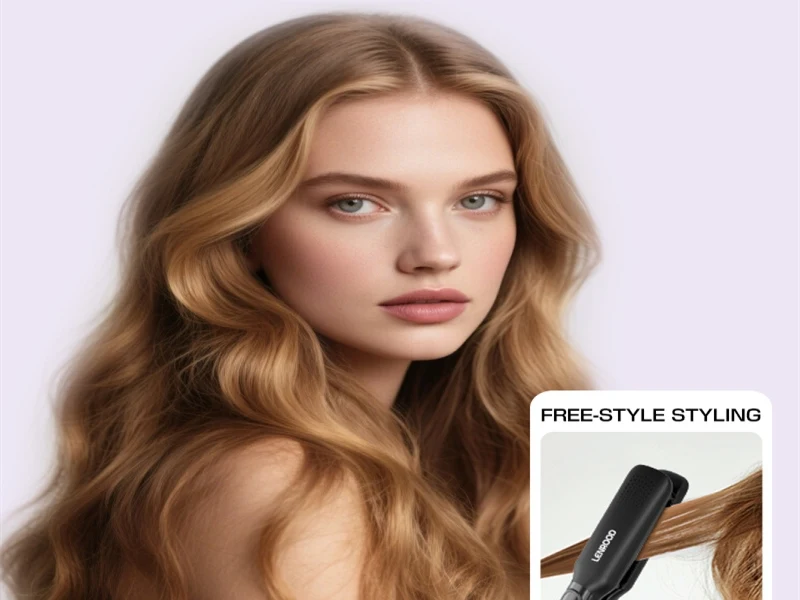
How to Choose a Hair Straightener for Fine Hair
What you need to know before using a hair straightener on fine hair. Fine hair has a harder time retaining moisture and is more sensitive than thicker hair, so take extra care when using your Electric Hair Straightener , including gentle heat and proper sectioning. If you already have naturally thin hair and it often appears flat, the first thing to consider is a straightener with adjustable heat settings. You don't need the highest heat to get your hair straight, and you can still achieve a smooth look with the right technique.
Choose a flat iron with ceramic plates, as they tend to heat evenly across the plate. An evenly heated plate will also save you from having to go over a section several times. Narrow plates, approximately 1 inch wide, are usually better for styling short hair, bangs, or layers. Narrow plates can also come closer to the scalp without taking as much hair between the plates. For fine hair, the right plate choice helps keep moisture and shine, and supports a gentle glide across each strand.
For fine hair, begin at about 250°F (120°C) to 300°F (150°C), and raise the temperature only if your hair does not straighten, until you find the exact setting that will give you the result you want, depending on the condition of your hair and how it responds to heat. If your hair has been bleached, colored, or dried out, keep the temperature lower and use a light touch that protects the cuticle.
Before straightening, wash, dry, and brush your hair, then apply a styling product for heat protection when using hot styling tools. Do not use the flat iron on wet hair unless it is a model approved for dry-to-wet hair and the manufacturer's instructions explicitly state that it is safe to do so. Work on small sections of hair and run the straightener through without pausing or going over the section multiple times, keeping a steady pace and light pressure for a calm finish.
For instance, if your fine hair falls flat by midday, cut back on styling products and style just the sections that need to be smoothed. In reality, lift the roots a little during styling to make sure that your hair does not come out flat. You can give your hair a sleek finish and still be gentle with it with the ideal heat, plates, and soft touches, and you can maintain shine with careful care.
How to Choose a Hair Straightener for Thick and Coarse Hair
For thick, coarse hair, it might take longer to straighten because there's more hair in each part, and it could be difficult to style it without fighting with it. If you keep making passes over the same spot with your straightener, it might not be the right kind of straightener for your hair type. A high-quality straightener with steady heat, a plate width suitable for your hair, and a variable temperature range can help speed things up and reduce frustration.
If you have thick hair, choose a flatiron with plates that are around 1.5 to 2 inches wide. Wide plates evenly distribute heat while covering more hair at a time, which may cut down on the time it takes to style thicker hair, long hair in particular. If your hair is shorter, layered, or prone to being unmanageable around the roots, then you may want to opt for a 1-inch flat iron for easier manageability. Ceramic plates distribute heat evenly, while titanium plates heat quickly and distribute heat evenly. Titanium flatirons work well on thick hair, but always turn to lower temperatures to avoid excess heat exposure, keeping the look safe and manageable.
Heat settings are important. The hair thickness and coarseness also play a role. It is true that thicker, coarser hair needs more heat than thin hair, but it doesn't mean that you have to choose the highest setting. The best starting point for straightening hair can be about 300 F – 350 F or 150 C – 175°C; then you can increase or decrease the temperature according to the specific needs. In general, bleached and colored hair requires the least amount of heat, so begin a little lower and adjust as needed.
Ensure the hair has been completely dried before you begin styling, and use heat protection spray. Section the hair into sections that are not too wide so the plates have enough hair to "bite into" as you run them through each section. Glide down the hair slowly and carefully from the root to the tip, never stopping in the same place, and keep a steady rhythm to avoid tugging or snagging.
What if you have very thick, extremely curly hair that normally requires 30 minutes to straighten? Shortening your section time can result in a more even finish and save time if you portion your hair into smaller parts. You can also straighten in layers, beginning from the bottom and working your way to the top. Thick and coarse hair can be smoothed, managed, and styled without damaging it using the appropriate plate size, temperature control, and techniques.
How to Choose a Hair Straightener for Curly and Wavy Hair
Our hair looks beautiful in its original form, curly and wavy, but there are many times when we want it to be less wavy and fluffy for work, a special event, or just a casual day. It is not so easy to get the best hair straightener for your curly or wavy hair, as you want a device to work on these different textures without turning your hair dry, frizzy, or unmanageable. The best hair straightener for you will depend on the type of wave your hair has, the density of your strands, and how often you intend to use it. The Cordless Hair Straightener should heat evenly, make contact with your hair, and have temperature control.
A straightener about 1 inch wide is practical for loose waves. It will give you better control and smooth over bends without "flattening" the hair too much. Wide-plate straighteners about 1.5 inches wide will be more effective if your hair is longer, thicker, or curled very tightly because you can get wider coverage without sacrificing styling time. Smaller sections will be easier to straighten evenly, particularly if your curls are tight or there are multiple layers.
The type of plates you choose is another important consideration. Ceramic plates are evenly heated and work well for most types of hair, especially wavy hair that you need to smooth out frequently. Titanium plates are high-heat, fast-heating plates perfect for curlier and stubborn curls, but they can be damaging to your hair when used poorly. If you have color-treated, broken, or dry curls, it's best to select a flat iron with adjustable settings rather than just an iron that heats up, so you can protect the cuticle while you style.
Before you straighten your hair, wash and condition your hair if necessary, then dry it completely. Use a heat protectant and section your hair into small sections. Use a lower temperature, like 300°F (150°C), first, and increase the temperature in successive sections if required. Glide the straightener along your hair, moving it from the roots to the ends, keeping the motion smooth and even to prevent creases.
If you already straightened your hair and it gets frizzy, or you need to bring back the smooth look, use smaller sections and just one steady pass instead of trying to quickly smooth down large sections of hair. Don't use a flat iron on a humid day if your style instantly frizzes out again, or apply a lightweight anti-frizz product that can stand up to the heat.
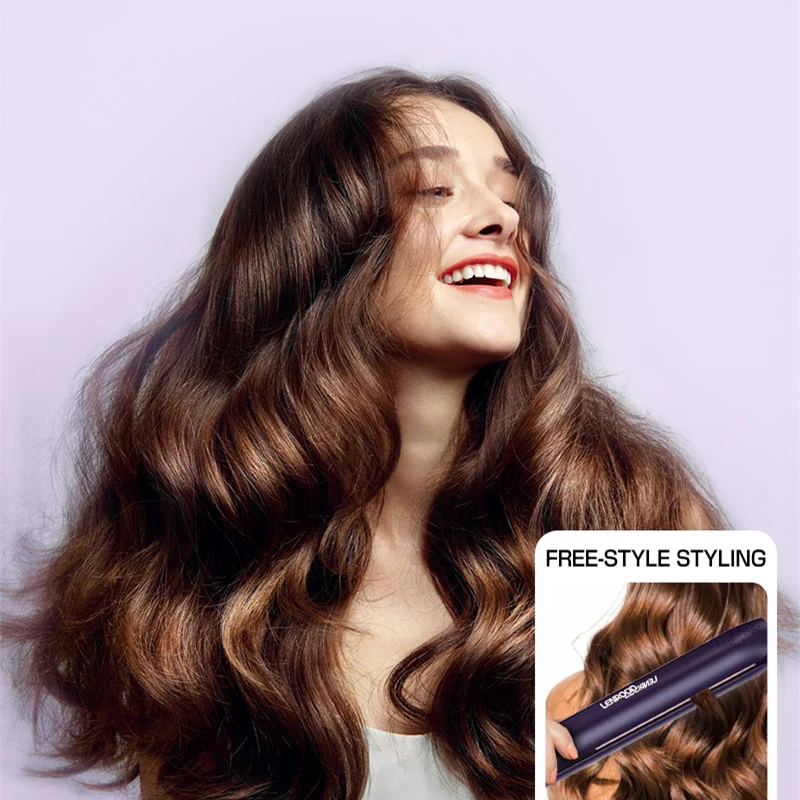
How Hair Straightener Temperature Settings Affect Different Hair Types
The temperature of a hair straightener has a huge impact on what the result will be after styling. Not enough heat will leave you with messy, wavy hair. Too much heat will potentially weaken the hair and cause some breakage and dry ends. Knowing how to choose the correct temperature is important for all hair types but is especially important for bleached or otherwise damaged hair. The thickness, texture, and condition of hair dictate how much temperature needs to be applied for best results.
Begin with a lower temperature if you have fine/thin hair (about 250F-300F, 120C-150C). Thin hair tends to burn more quickly so do not turn up the heat just to go faster at the end of your styling. If your hair goes straight at a lower temperature, then do not turn it higher, and try a steadier glide instead of rushing.
Begin at a low temperature, perhaps in the 300°F to 350°F range (150°C to 175°C), and see how it goes. Medium-textured or fine hair should work well at that temperature. If your hair is a little thicker or straighter, turn it up just a touch to help it finish.
Hair that is thicker, coarser, curlier, or tightly coiled may need a higher temperature setting to get a sleek finish. A good starting point could be 300–350°F and tweak from there if it is taking more effort to get your hair straight. Never presume a starting point of 400°F or higher without good reason, since higher heat can damage any hair. For bleached, chemically treated, or damaged hair, go lower if you can.
Your hair's condition matters as well as its texture. For instance, a person with thick bleached hair might need less heat than someone with thick, healthy, untreated hair. Don't forget to use a heat protector, make sure your hair's fully dry, and don't go over the same spot over and over with the flat iron at a slow speed.
One easy way to test to find the perfect setting is to begin at the lowest heat setting that you think might work for your hair, straighten a small section, and see if you get the desired result. If the hair becomes smooth after only one pass using a light hand, continue with that setting. If not, raise the temperature gradually (rather than going straight to the hottest setting).
Key Hair Straightener Features to Consider Before Buying
It's not just about getting a straightener that heats up quickly. There are other things you want to consider to get a quality flat iron: Plate material – The type of material your plates are made of affects the results you get when you straighten and the amount of time it takes to get results. A straightener that is perfect for fine hair that is short may not be the best choice if your hair is thick and curly and longer in length.
Plate Material
The type of plate you have will influence the rate at which heat is transferred to your hair and how smoothly your straightener slips across each section.
Ceramic plates: They offer more even heat and are a suitable choice for elegant, fine, natural, or slightly wavy hair. They are also a suitable choice for everyday styling if the optimum temperature is applied.
Titanium plates: Quickly heat up and evenly distribute heat, which makes them a great choice for thick, coarse, or tightly curled hair. You do need to watch out for temperature control.
Tourmaline-Coated plates: The plates are typically meant to eliminate static and frizz. See if the plates are pure ceramic or coated with titanium, as product construction differs.
Select a plate material that suits the needs of your hair, rather than thinking one type of plate is better for all.
Adjustable Temperature Settings
This is a must-have feature for the versatile straightener. Thin or brittle hair is better suited to lower heat, and very thick hair will need higher heat to get a good result. Look for a flat iron with multiple heat settings so you can find the right heat rather than just the highest.
For instance, if you're passing it to your sibling who has delicate hair, as well as to you with cozy, curly hair, the flexible warmth balance makes it less complicated to get a good style for each of you. Begin with lower settings and increase just as needed.
Plate Width
Width of the plate determines quantity of hair the flat iron can straighten at once.
Not longer than 1 inch: For short hair, bangs, layers, and fine detailing.
Not longer than 1.25 inches: A good size for many hair types and lengths.
Not longer than 1.5 to 2 inches: 1.5 to 2 inches: Beneficial for longer and thicker hair, as wider plates can accommodate more hair at once.
Keep in mind that bigger doesn't mean better. If you have short hair or plan to style curls and waves with your straightener, smaller plates will give you more ease of use.
Heat-Up Time at Temperature Stability
A fast-heating straightener will get you out the door in the mornings even faster. Although, constant heat is equally as effective as heat that warms quickly. Since this model can get too hot and stay too hot, you may have to run your straightener through a few extra passes.
Even during styling, an auto temperature display allows you to verify what temperature the wand is set to.
Safety Features
If you plan to use your straightener often, safety features are something to consider. An automatic shut-off feature can prevent you from leaving the tool on once you've styled your hair. Other features like a heat-resistant housing, a good stand, and a swivel cord can make it easier to hold and handle.
Before making a purchase, learn if the straightener is compatible with the voltage in your destination. Just because a flat iron is designed to be travel-compatible doesn't mean it works everywhere.
Ease of Use and Maintenance
Look for a straightener that will sit well in your hand and run smoothly through your hair without catching. Consider the weight of the straightener, the shape of the handle, the length of the cord, and whether the plates close easily. These factors matter more if you have long, thick hair that takes time to style.
If you wish, consider selecting a model that is simple to clean: after the device has cooled down and is unplugged, clean the plates with a soft cloth as directed by the manufacturer's instructions. Regularly clean up product build-up to maintain smooth plates.
Check these specifications for any professional hair straightener against the way you style your hair. For instance, if you straighten fine hair once or twice a week, then adjustable low heat and smooth ceramic plates are all you need. However, if you curl hair that is long and thick regularly, then plate width, temperature stability, and ease of holding are going to be what matter most.
Table of Contents
Yiwu JiHong Electric Appliance Co., Ltd. was established on April 27, 2017, and owns two independent brands: "Lenrood" and "Coobo." Primarily focused on offline distribution and wholesale channels, the company has over 30 years of experience in the home appliance industry, with annual sales revenue of approximately 1 billion CNY. Known for its stylish designs, superior quality, and smart features, JiHong offers a wide range of products, including fashionable personal care appliances, oral care products, health and wellness devices, and small kitchen appliances. The company emphasizes R&D, innovation, and quality control, ensuring continuous product innovation, market expansion, and reliable after-sales service. It is committed to becoming a benchmark in the new-era smart small appliance industry. Guided by the principles of "innovative technology, exceptional quality, and warm customer-centric culture," JiHong strives to deliver extraordinary and heartwarming experiences, bringing more warmth to everyday life.